
Are Your Lenses Running on Outdated Technology?
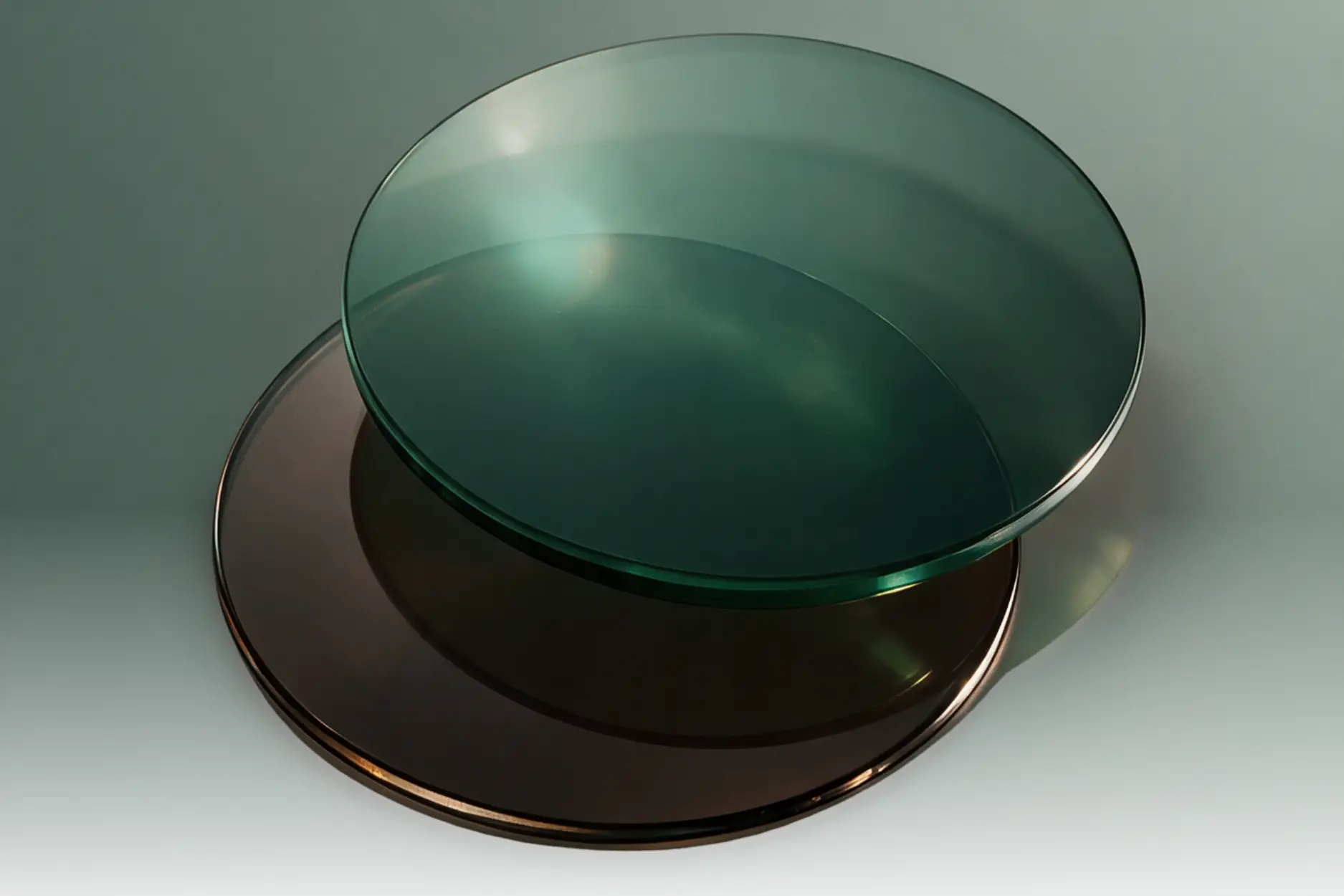
For decades, sunglass lenses have been described by a short list of values: visible light transmission, UV protection, and polarization. These remain essential, but they do not describe how a lens changes the way we see color. For any eyewear brand, there is a separate question: what strategy does the lens use to manage light, and is it still the best one available? A lens can meet every one of those specifications and still work by simply making everything darker.
The trade-off built into every dark lens
For most of the history of eyewear, protecting the eye meant reducing the amount of light that reached it, and the usual way to cut glare was a darker lens. But blocking light also blocks visual information. Along with the glare, a darker lens can take away cues the brain relies on, such as color, contrast, depth, and fine detail.
Color vision depends on the eye’s cone photoreceptors, which need reasonably bright light to work well. Under the CIE system for mesopic photometry (CIE 191:2010), vision is photopic above about 5 candelas per square meter, mesopic between about 0.005 and 5 candelas per square meter, where cones and rods are both active, and scotopic below about 0.005, where only the rods are active and color vision is not possible. Other sources place these boundaries somewhat differently. In dim light, colors appear desaturated. A lens that darkens the scene by cutting light across all wavelengths moves the eye’s working light level down that scale. That can be a fair price in intense sunlight, but it matters when ambient light is already limited.
A different way to filter light
The eye has three kinds of color-sensing cones, and the red-sensing and green-sensing ones respond to much of the same light. Many color-enhancing filters work on that shared region rather than dimming everything equally, which can make small color differences easier to see. Hue Lens Colorboost describes the result with two measures, each compared with a clear reference lens: color resolution (CRF), how well similar colors can be told apart and the main measure of color contrast, and color accuracy (CAF), how closely colors match the real thing. The typical benefits of better color separation include better awareness of the surroundings outdoors, clearer separation of objects in sport and performance eyewear, and easier recognition of objects, surfaces, and fine detail. The right lens also depends on the scene: an everyday urban or suburban view has a balanced mix of warm, cool, and neutral colors, while snow, desert, ocean, and forest lean toward one group, and Colorboost lenses can be tuned to a specific environment.
A lens that cuts every wavelength equally gives up color information along with brightness.
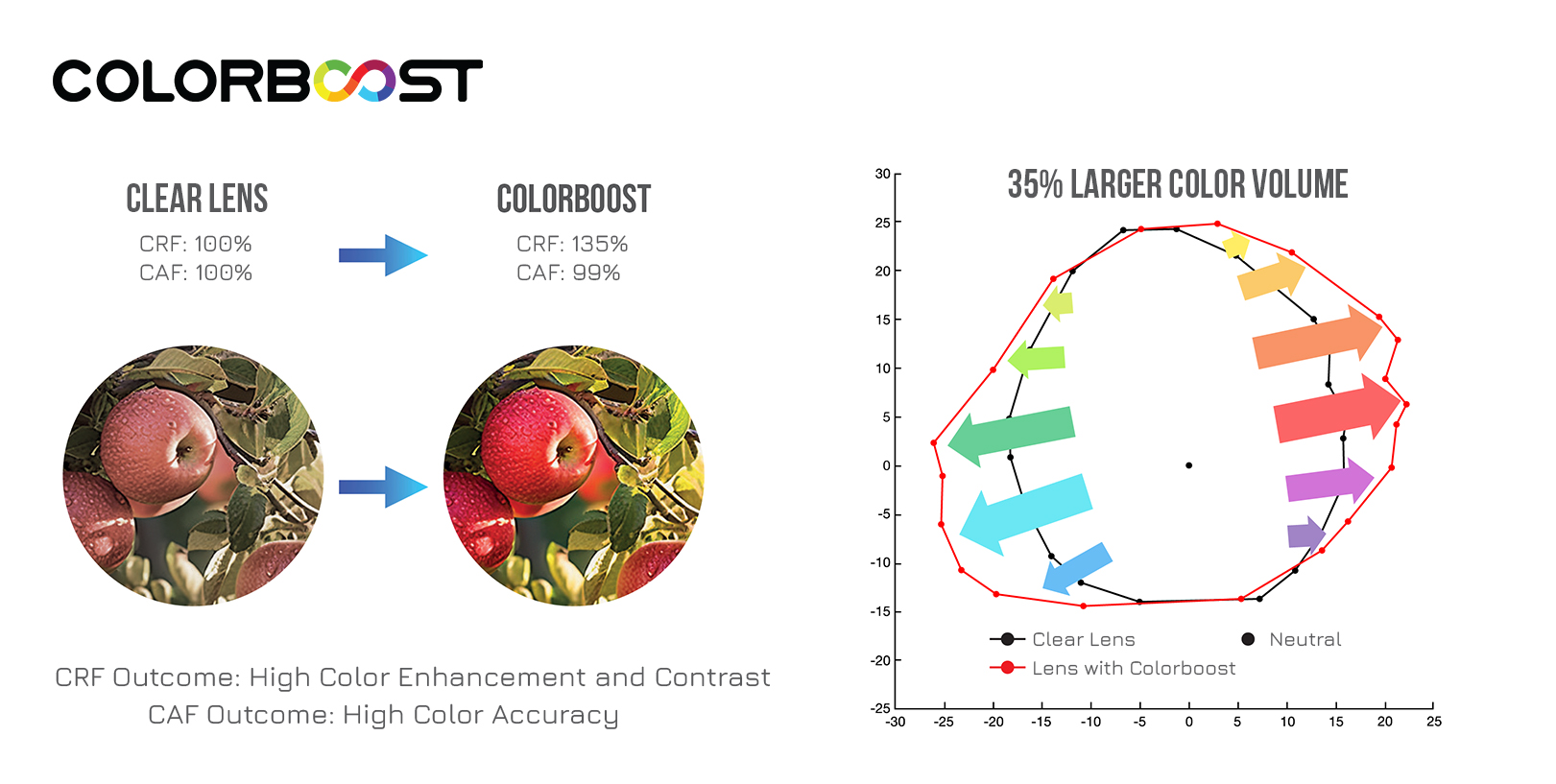
Fig. 2: Colorboost lens: Measurable color performance. Picture: Colorboost
Where Colorboost comes in
Colorboost lenses are built around that idea: shaping which wavelengths pass through rather than uniformly darkening the view, for more color volume and better color separation than a clear lens. Wavelength-selective filtering shifts the question from how much light a lens blocks to how well it shapes the light it lets through. It is also why Hue Lens Colorboost tracks more than one number. Increasing color separation is only half the goal; keeping colors accurate is the other half. Historically, lens makers often had to choose between stronger contrast and true-to-life color. Yellow lenses are a familiar example: they boosted contrast but distorted how colors really look. Colorboost lenses are designed to score highly on both CRF and CAF at the same time, a combination that older approaches could not reach.
A lens that only darkens the view cuts glare, but does it do anything for color? What would your customers notice first if it did?
Sources: Photopic, mesopic and scotopic luminance ranges (based on CIE 191:2010, “Recommended System for Mesopic Photometry Based on Visual Performance”): Konica Minolta Sensing, “What Is Mesopic Photometry?” https://sensing.konicaminolta.asia/what-is-mesopic-photometry/. Desaturation of colors in dim light: Ashraf, M., Mantiuk, R. K., Finlayson, G., Kucuk, A., & Wuerger, S., “Colour Difference Formula for Photopic and Mesopic Vision Incorporating Cone and Rod Responses,” London Imaging Meeting, Society for Imaging Science and Technology, 2022, pp. 79-83, https://www.cl.cam.ac.uk/~rkm38/pdfs/ashraf2022_mesopic_color_de.pdf. Overlap of the red- and green-sensing cone responses and the focus of many color-enhancing filters on that region: Santini, B., “The Science Behind Color Enhancement,” 2020 Magazine, June 2015, https://www.2020mag.com/article/the-science-behind–color-enhancement. History of light-blocking lenses, lens specifications, CRF and CAF definitions, typical benefits, scene-specific tuning, and the yellow-lens comparison: Valentine, K., “Putting a number on color,” MAFO 5-26, pp. 21-24 (Dr. Keenan Valentine is Co-Founder and CTO of Hue Lens Colorboost).