
The physics behind whiteout, and why snow-sport lenses filter blue light
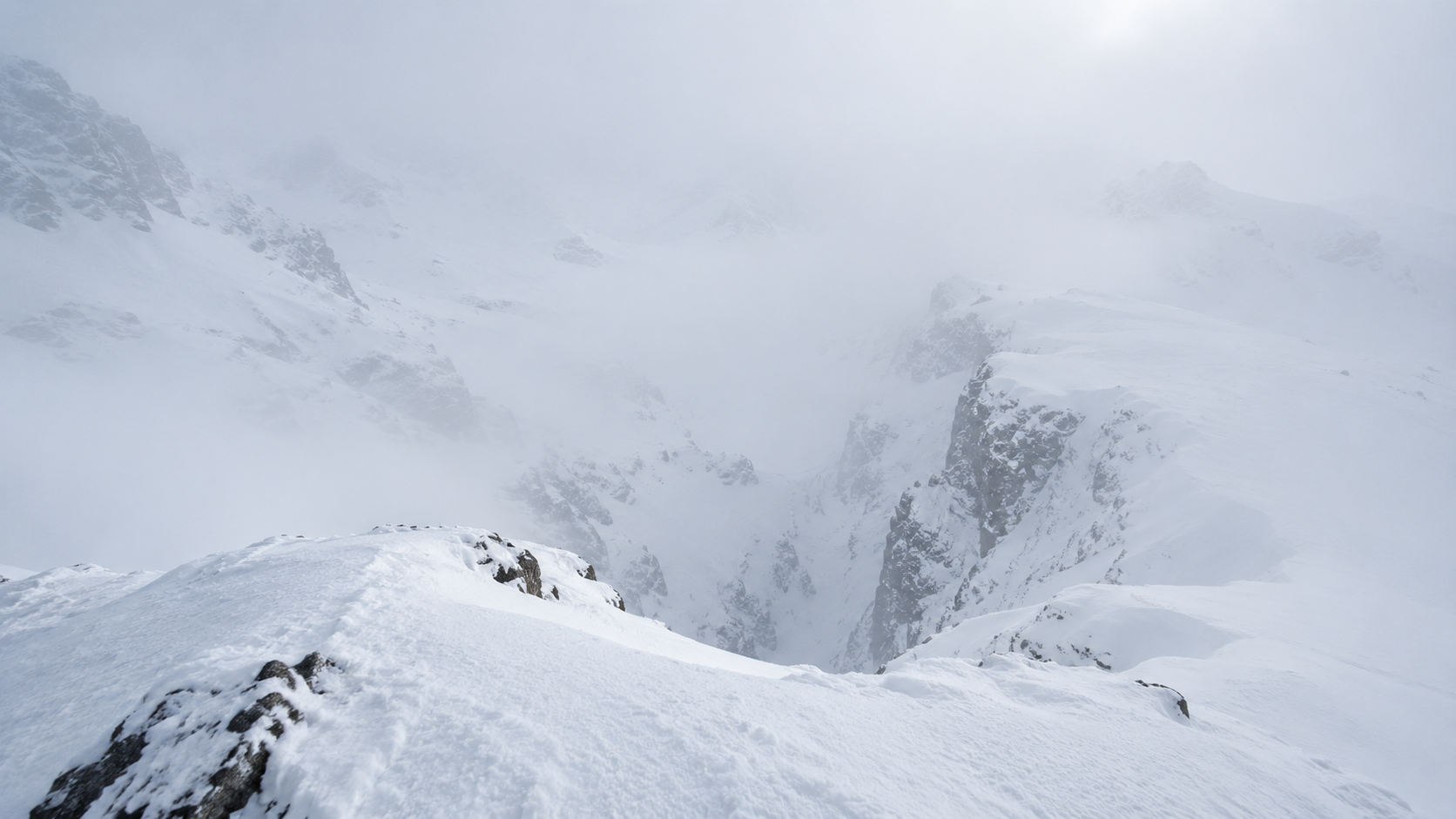
Fig. 1: A hiker’s POV in flat light, where depth and terrain become difficult to distinguish.
On a clear day, judging distance and terrain in the mountains feels automatic. Under the right conditions, snow and cloud cover can erase that ability almost entirely. It can arrive quickly and often without warning, and visibility itself can technically remain excellent.
How whiteout actually happens
Meteorologists define whiteout as a condition in which the observer appears to be engulfed in a uniformly white glow. It occurs over unbroken snow cover beneath a uniformly overcast sky. Sunlight is diffused as it passes through the cloud layer, and with the help of “snow blink,” light reflected up from the snow and back down from the cloud, the light coming from the sky ends up about equal to the light coming from the snow surface. The result is that shadows, the horizon, and clouds can no longer be made out, the sense of depth and orientation is lost, and only very dark, nearby objects remain visible. Blowing snow can produce the same effect.
Why losing shadows means losing depth
At a distance, the brain judges shape, slope, and distance from a mix of cues, including shading and shadow, surface texture, relative size, and the position of the horizon. Stereo vision, which compares the views from each eye, becomes less reliable the farther away something is. A whiteout removes shadows and surface texture and often erases the horizon, so most of those cues disappear together. A small rock a few feet away can then be hard to tell from a mountain miles off, and a sheer drop hard to tell from a gentle dip in the snow. Meteorologists also call the condition “milky weather,” which describes the sensation well: being enclosed in a uniform white glow with nothing left to judge distance by.
It isn't the same as low visibility
This is what makes whiteout and its milder, related condition, flat light, genuinely deceptive. How far you can technically see can stay good while depth perception is gone. The World Meteorological Organization’s definition ties the condition to a lack of contrast between the sky and the surface, not to distance. In its report on a whiteout helicopter accident, Canada’s Transportation Safety Board noted that the real hazard is that pilots may not suspect the phenomenon, because they can be in clear air. It’s a contrast problem, not a distance problem, which is why it catches experienced skiers, pilots, and mountaineers off guard too.
In a whiteout, a small rock a few feet away can be hard to tell from a mountain miles off, and a sheer drop hard to tell from a gentle dip in the snow.
Blue light adds to the flattening
Losing directional light is what flattens the view, but wavelength can make it worse. In overcast, fog, and snowfall, a large share of the scattered light is short-wavelength blue, and sport-science research on snow-sport filters found that this blue scatter further reduces contrast. That is why snow-sport lenses commonly attenuate blue light rather than blocking it entirely, and why yellow, orange, and red tints are common in the category. Controlled studies of yellow and blue-attenuating filters show real but context-specific results: contrast gains in some situations, such as bright objects against a blue background, alongside a loss of color discrimination, and no clinically significant benefit in others. No tint can put shadows back into light that contains none. The most a filter can do is reduce one source of lost contrast.
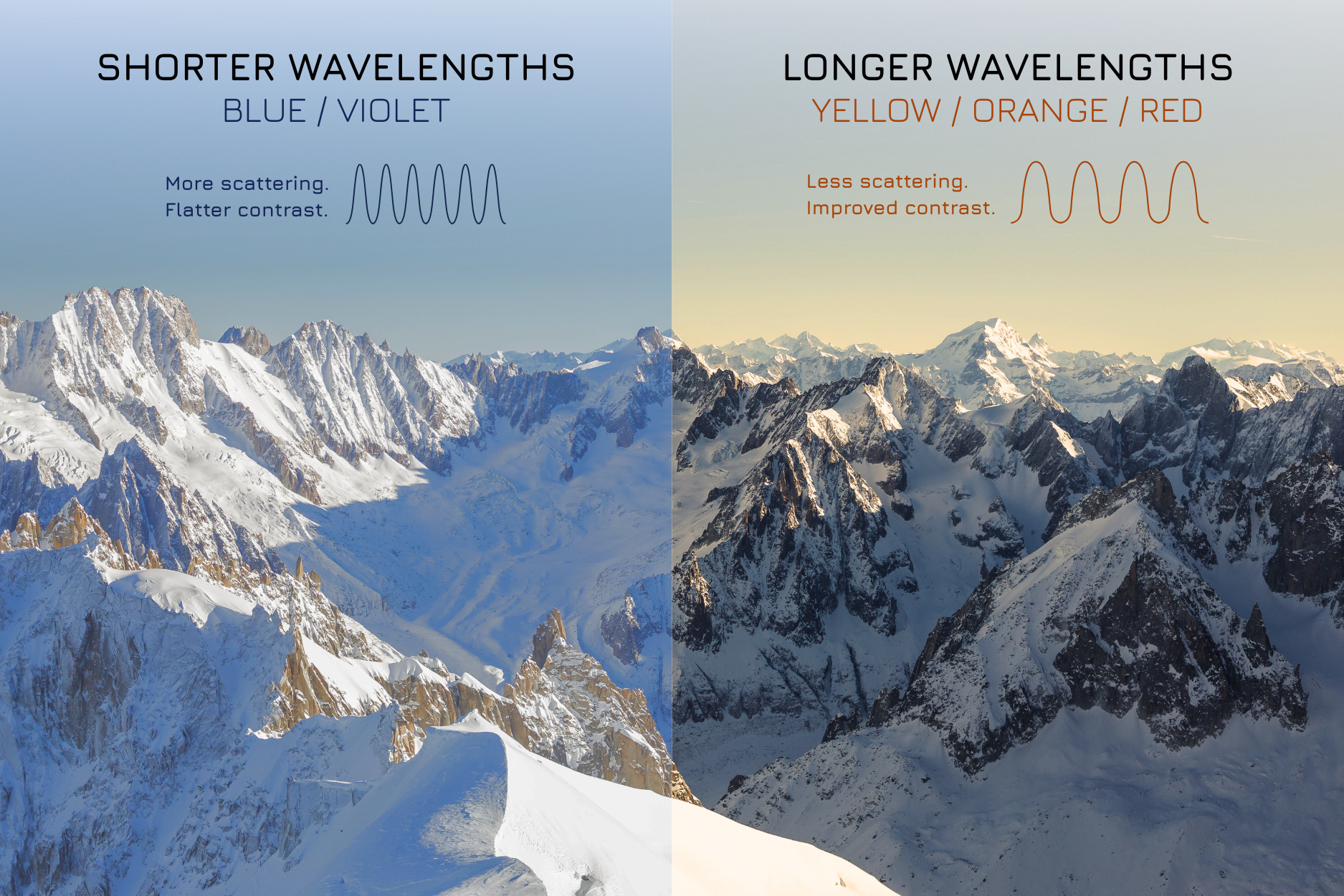
Fig. 2: Longer wavelengths can preserve more terrain contrast in flat-light conditions.
Colorboost's Snow & Alpine Lineup
Colorboost’s Snow & Alpine lineup, shown in the figure, spans a wide range of light levels. Its four lenses all sit in the grey, brown, and pink range, and their visible light transmission (VLT), the share of light a lens lets through, runs from 15% to 47%. That spread reflects how different one snowy day can be from another. In whiteout and fog, lens makers generally recommend lighter tints, because a darker lens further reduces the light reaching the eye, while bright sun on open snow calls for far less transmission. This article doesn’t present a whiteout-specific performance test of these lenses. The specifications in the figure are the catalog’s published values.
If a rock a few feet away can be hard to tell from a mountain miles off, how much of what you miss on a snowy day has nothing to do with visibility at all? And does the lens you wear change with the light, or stay the same?
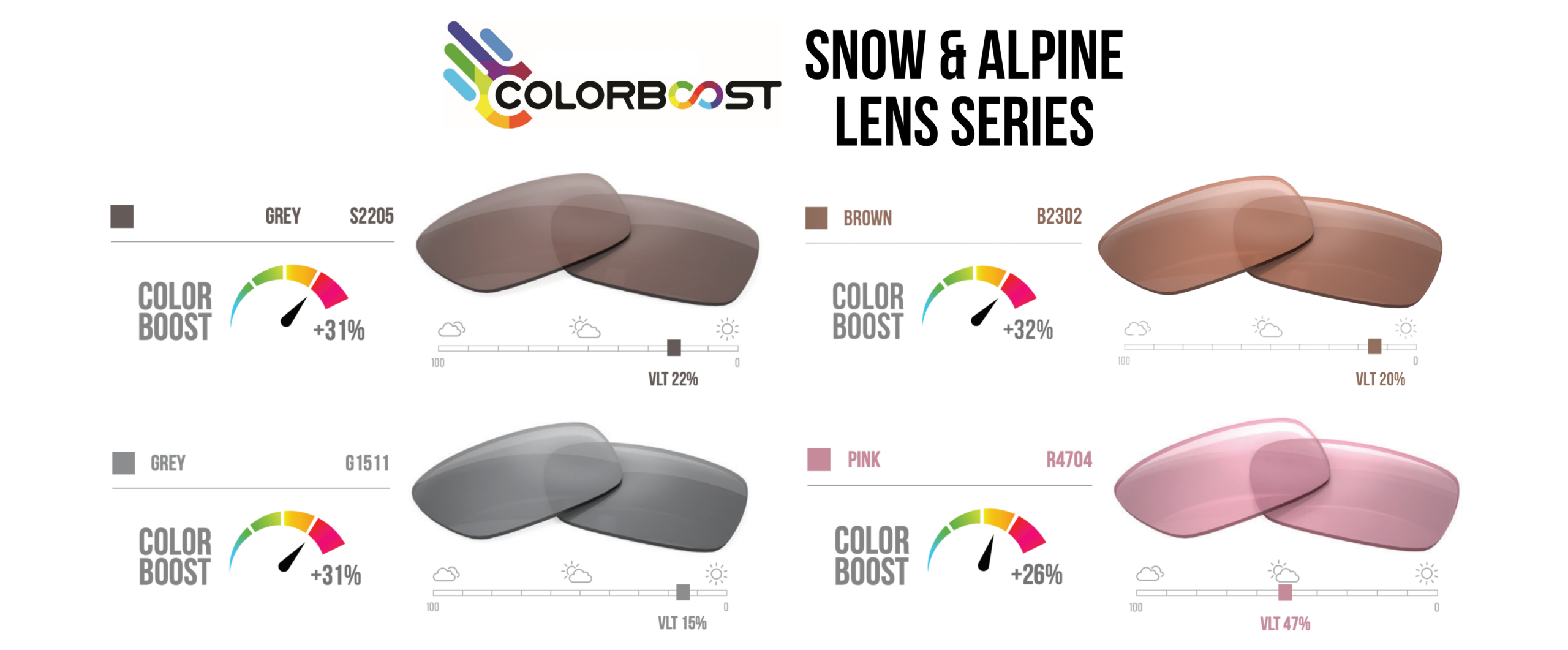
Fig. 3: Colorboost’s Snow & Alpine lens series, with tints designed for varying snow and light conditions. Picture: Colorboost
Sources: World Meteorological Organization definition, via Office québécois de la langue française, https://vitrinelinguistique.oqlf.gouv.qc.ca/fiche-gdt/fiche/26512742/blanc-dehors. Whiteout and clear air, flat light: Transportation Safety Board of Canada, Aviation Investigation Report A00C0099, https://bst-tsb.gc.ca/eng/rapports-reports/aviation/2000/a00c0099/a00c0099.html; FAA Safety Learning Center, “Flying in Flat Light and White Out Conditions,” https://www.faasafety.gov/gslac/ALC/libview_search.aspx?id=6844. Reduced reliability of stereopsis at far distances: Johnston, E.B., Cumming, B.G. & Parker, A.J., “Integration of depth modules: stereopsis and texture,” https://www.dpag.ox.ac.uk/publications/113890. Blue scattered light and snow-sport filters: “Wer die Wahl hat, hat die Qual: Wie wirken (Farb-)Filter beim Schneesport?,” https://sponet.de/sponet/Record/3044438?lng=en. Tinted-filter evidence: “Contrast is enhanced by yellow lenses because of selective reduction of short-wavelength light,” Optometry and Vision Science 77(2):73-81 (2000), https://pubmed.ncbi.nlm.nih.gov/10701805/; Aston University, “Effects of yellow filters on visual acuity, contrast sensitivity and reading under conditions of forward light scatter,” https://research.aston.ac.uk/en/publications/effects-of-yellow-filters-on-visual-acuity-contrast-sensitivity-a/; Lian, Y., et al. (2022), “The Long-Term Effect of Blue-Light Blocking Spectacle Lenses on Adults’ Contrast Perception,” Frontiers in Neuroscience, https://doi.org/10.3389/fnins.2022.898489. Manufacturer guidance on lens choice for whiteout and fog (not independent research): Out Of, “Whiteout skiing: which goggle lens to choose for fog and low visibility,” https://out-of.com/tech-pills-whitout/. Snow & Alpine lens specifications and Color Boost figures: Colorboost Lens Catalog 2026.