
Why darker isn't always better for color vision, especially as the light fades
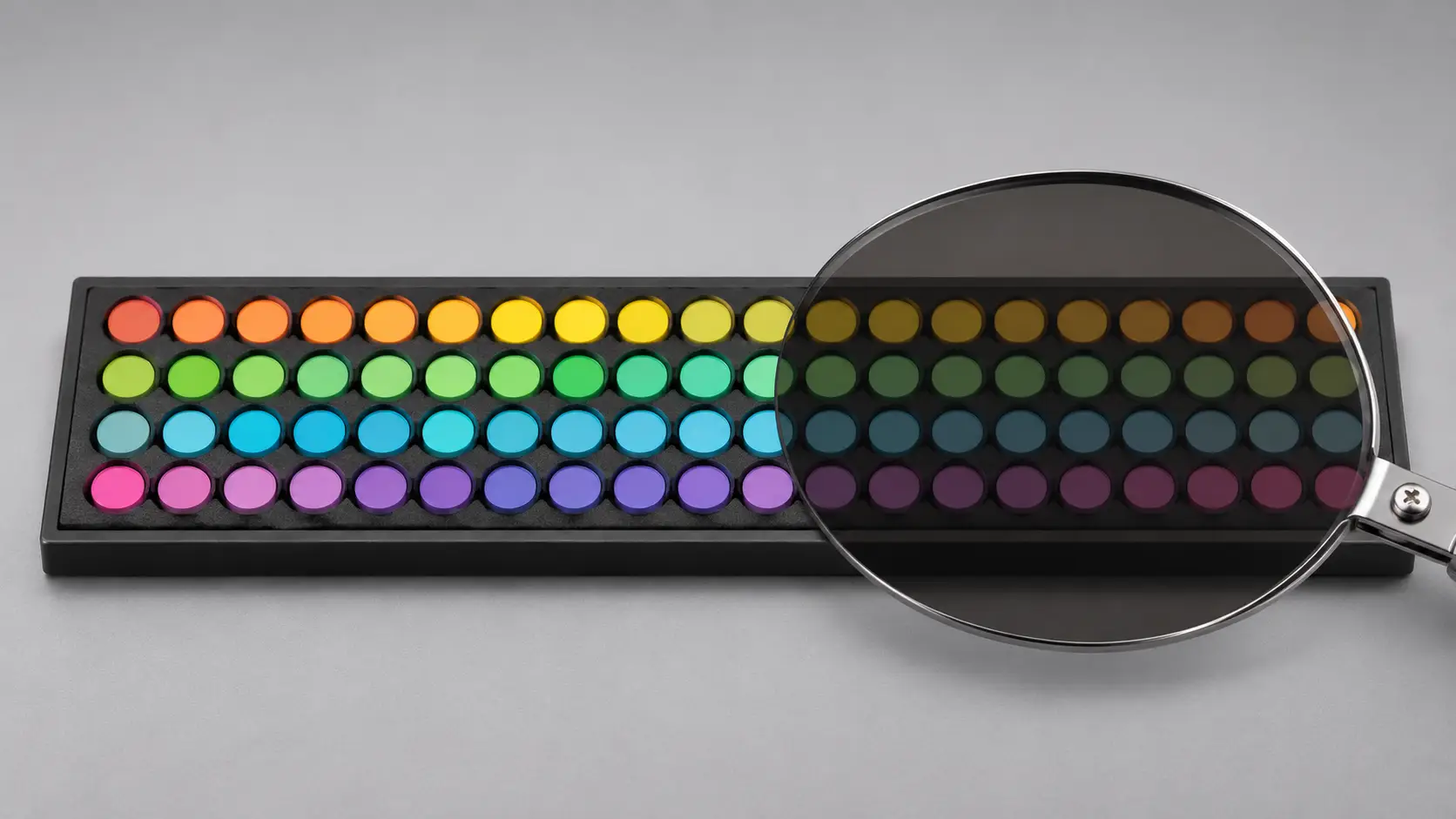
Fig. 1: Illustration: color caps from a hue arrangement test, partly viewed through a dark-tinted lens.
Most people judge a pair of sunglasses by how dark they look. That instinct isn’t wrong: darker lenses do cut glare. But it comes with a cost that is easy to miss. Color vision runs on the same light a dark tint is designed to block.
The trade-off built into every dark lens
Color vision depends on the eye’s cone photoreceptors, and cones need reasonably bright light to work well. As light drops, vision moves from cone-based (photopic) vision, through a range where rods and cones both contribute (mesopic), toward rod-only (scotopic) vision, which cannot distinguish color at all. A 2017 review in Philosophical Transactions of the Royal Society B describes what happens along the way: as light levels fall, colors appear less and less saturated, and their hue and brightness shift, making color perception less reliable. A uniformly dark lens reduces light across every wavelength at once, moving the eye’s working light level down that scale. The effect matters most when ambient light is already limited, such as at dusk.
Filtering light changes what people can tell apart
This isn’t only theory. A 2024 study in Scientific Reports tested how window films, electrochromic glass and fabric shades, at visible light transmittance levels down to 1 percent, affect what people see through them. Window films and electrochromic glass hindered participants’ blue-green color discrimination, while fabric shades also reduced red-yellow discrimination. The study looked at windows rather than eyewear, but it shows that the way a filter cuts light can affect which colors remain easy to tell apart.
A different way to filter light
Wavelength-selective filtering works differently. Instead of cutting every wavelength by the same amount, it targets specific bands. Many color-enhancing filters focus on the region where the responses of the red-sensing and green-sensing cones overlap. A 2024 study of such notch filters in people with red-green color deficiency found that they enhanced perceived color saturation, although their effect on color discrimination at threshold was minimal.
A lens that blocks every wavelength equally is also blocking the light color vision depends on.
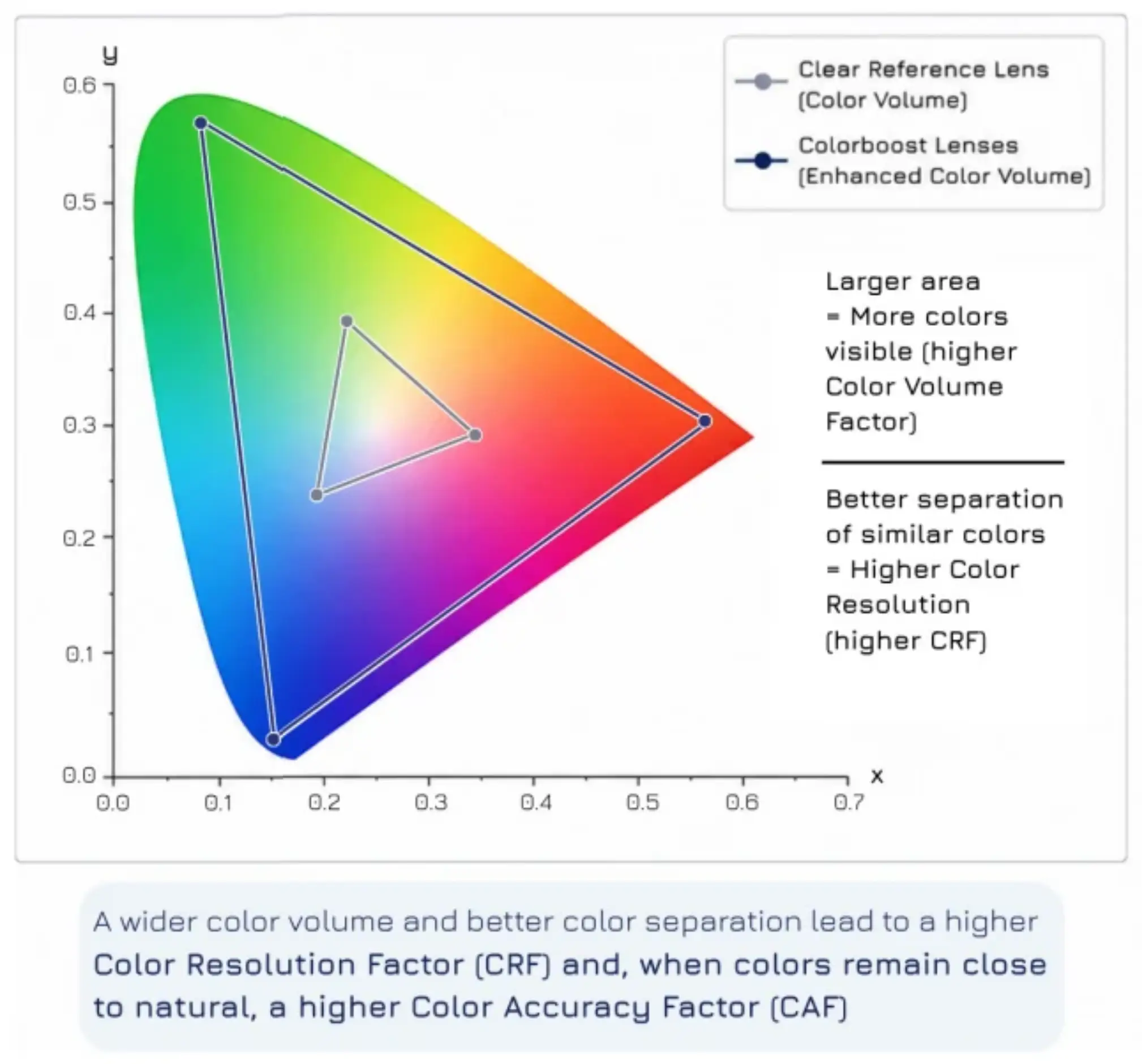
Fig. 2: Colorboost lens: Measurable color performance. Picture: Colorboost
What this means for Colorboost's approach
It’s the same idea behind Colorboost lenses: shaping which wavelengths pass through, rather than uniformly darkening the view. Wavelength-selective filtering doesn’t remove every trade-off, but it changes which ones get made. Colorboost describes the result with two measures, each compared with a clear reference lens: color resolution (CRF), how well similar colors can be told apart, and color accuracy (CAF), how closely colors match the real thing. Measured against a clear lens, a Colorboost lens reaches a CRF of 135%, meaning 35% more distinguishable colors, while CAF holds at 99%. The point is achieving both at once. Yellow-tinted lenses, for example, increased contrast but distorted real-world color. Colorboost lenses are designed to deliver color separation and color accuracy together, the combination older tinting approaches could not reach.
If darker tints can cost color when the light fades, has your current pair ever been judged on how it handles color, or only on how dark it looks?
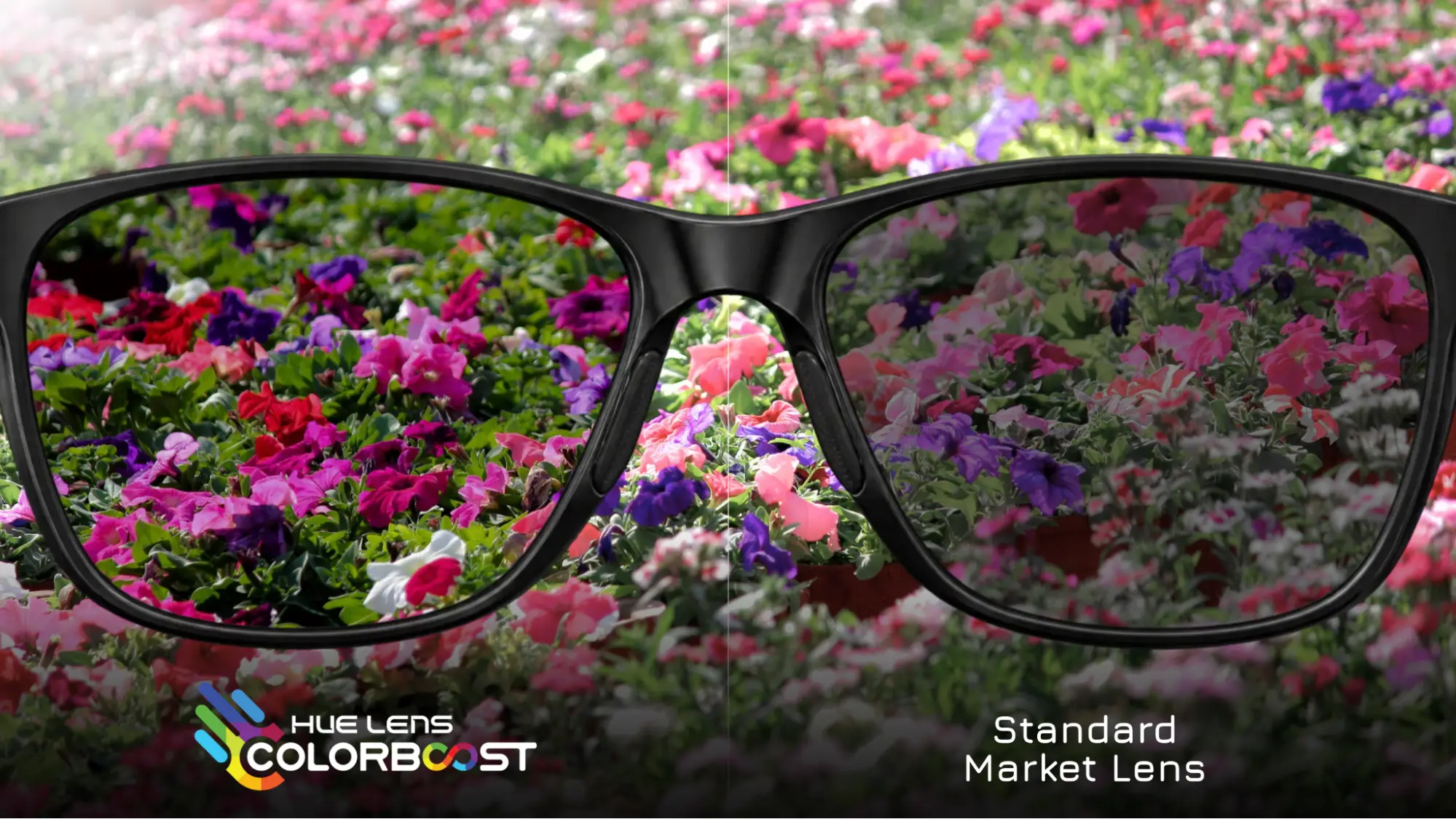
Fig. 3: Colorboost Lens vs. Standard Market Lens. Illustrative image. Picture: Colorboost
Sources: Cone and rod vision, color-blind scotopic vision, and loss of color saturation and reliability in dim light: Kelber, A., Yovanovich, C. & Olsson, P. (2017), “Thresholds and noise limitations of colour vision in dim light,” Philosophical Transactions of the Royal Society B, 372: 20160065, https://doi.org/10.1098/rstb.2016.0065. Window films, glazing and shades and color discrimination: Ko, W. H. et al. (2024), “Assessing the impact of glazing and window shade systems on view clarity,” Scientific Reports, 14: 18392, https://www.nature.com/articles/s41598-024-69026-x. Notch filters and perceived color saturation in red-green color deficiency: Somers, L. P., Franklin, A. & Bosten, J. M. (2024), “Empirical tests of the effectiveness of EnChroma multi-notch filters for enhancing color vision in deuteranomaly,” Vision Research, 218: 108390, https://doi.org/10.1016/j.visres.2024.108390. Focus of color-enhancing filters on the overlap of the red- and green-sensing cone responses: Santini, B., “The Science Behind Color Enhancement,” 20/20 Magazine, June 2015, https://www.2020mag.com/article/the-science-behind–color-enhancement. Wavelength filtering versus darkening, CRF and CAF definitions, and the yellow-lens comparison: Valentine, K., “Putting a number on color,” MAFO 5-26, pp. 21-24. CRF 135% and CAF 99%: Hue Lens Colorboost Lens Catalog 2026.